
Hue is famous for its Imperial City, royal tombs, pagodas, and refined cuisine, but its traditional craft villages reveal an equally meaningful side of the former capital. Among them, incense making village Hue stands out for its radiant displays of red, yellow, green, purple, and pink incense sticks. Arranged in wide, flower-like clusters, these colorful bundles have become one of the city’s most recognizable travel images.
Behind the beautiful photographs lies a living craft practiced by local families. A visit introduces travelers to the connection between incense, spiritual life, family traditions, and the daily work of artisans. Rather than being only a photography stop, incense making village Hue offers a chance to understand how a familiar Vietnamese cultural object is produced and why it remains important today.
Beyond Hue’s royal landmarks lies a world of color, tradition, and craftsmanship waiting to be discovered at its iconic incense-making village.
A Colorful Introduction to Hue’s Traditional Craft Heritage
Show table of content
- 1. Where Is Incense Making Village Hue?
- 2. The History of Thuy Xuan Incense Village
- 3. Why Incense Is Important in Vietnamese Culture
- 4. How Traditional Hue Incense Is Made
- 4.1. Preparing the Bamboo Sticks
- 4.2. Creating the Fragrant Mixture
- 4.3. Forming the Incense
- 4.4. Drying and Bundling
- 5. What to Experience at Thuy Xuan Incense Village
- 5.1. Watch Local Artisans at Work
- 5.2. Try Making an Incense Stick
- 5.3. Photograph the Colorful Displays
- 5.4. Buy a Locally Made Souvenir
- 6. The Best Time to Visit
- 7. Responsible Photography and Visitor Etiquette
- 8. Attractions to Combine with Thuy Xuan
- 9. Why These Houses Need Protection
- 10. Explore Hue with Hue Local Experiences
- 11. Why Thuy Xuan Is More Than an Instagram Stop
- 12. Conclusion: Discover the Fragrant Soul of Hue
1. Where Is Incense Making Village Hue?
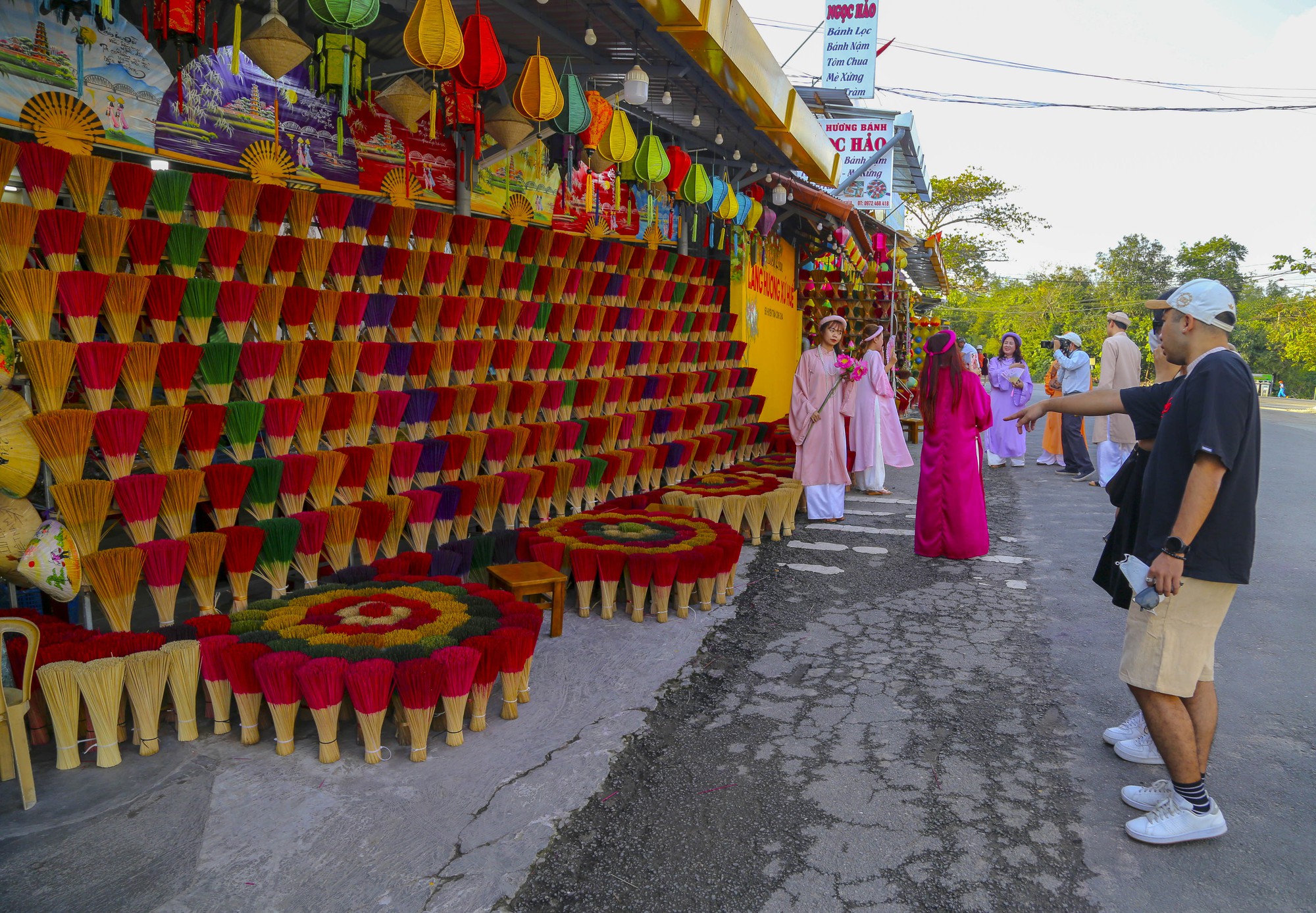
The destination most travelers mean when using the phrase incense making village Hue is Thuy Xuan Incense Village. It is located along Huyen Tran Cong Chua Street, about seven kilometers southwest of central Hue. The road passes through a green area near Vong Canh Hill and several important Nguyen Dynasty royal tombs, making the village easy to include in a cultural itinerary.
Thuy Xuan is not enclosed behind a single entrance gate. Visitors encounter a series of family workshops and shops displaying incense along the roadside. Each space has its own arrangement, products, and approach to welcoming guests. Because people live and work here, the destination feels different from a formal museum or purpose-built attraction.
Travelers can reach incense making village Hue by bicycle, motorbike, taxi, private car, or guided tour. A guide adds explanations about the craft and local customs. Consider traffic, heat, and weather before cycling.
2. The History of Thuy Xuan Incense Village
According to Vietnam’s national tourism information, Thuy Xuan has practiced incense making for around 700 years. Its long history is closely connected with Hue’s development as a political, religious, and cultural center. Incense was needed for temples, pagodas, ancestral altars, ceremonial occasions, and household worship, creating steady demand for skilled producers.
During Hue’s imperial era, the region’s craft communities supplied goods for both courtly and everyday life. Although production methods and markets have changed, families in incense making village Hue have continued passing knowledge from one generation to the next. Their work represents more than the survival of an old occupation; it demonstrates how a traditional craft can adapt while retaining cultural meaning.
Today, tourism provides artisans with new opportunities to introduce their work, sell locally made products, and offer hands-on experiences. At the same time, increasing popularity creates a responsibility to preserve the village’s identity. Visitors should remember that the colorful setting exists because incense remains a real product connected to working households.
3. Why Incense Is Important in Vietnamese Culture
Incense appears in many aspects of Vietnamese spiritual and family life. It may be offered at ancestral altars, pagodas, temples, communal houses, and memorial sites. The act of lighting incense can express respect, remembrance, gratitude, or a wish for peace and well-being. Practices differ among families and religious communities, so incense should not be reduced to one single meaning.
In Hue, where royal heritage, Buddhism, ancestor veneration, and community traditions are especially visible, the fragrance of incense is part of the city’s cultural atmosphere. Understanding this context transforms a visit to incense making village Hue from a colorful photo opportunity into a more thoughtful encounter with local life.
Visitors can appreciate the craft by observing respectfully, asking appropriate questions, and listening to local explanations. In worship spaces, follow posted guidance and avoid treating altars as decorative backgrounds.

4. How Traditional Hue Incense Is Made
The exact techniques and ingredients can differ between households and product types, but incense production generally involves several careful stages. At incense making village Hue, travelers may see artisans preparing bamboo sticks, creating a fragrant mixture, forming the incense around each stick, drying the finished pieces, and arranging them into bundles.
4.1. Preparing the Bamboo Sticks
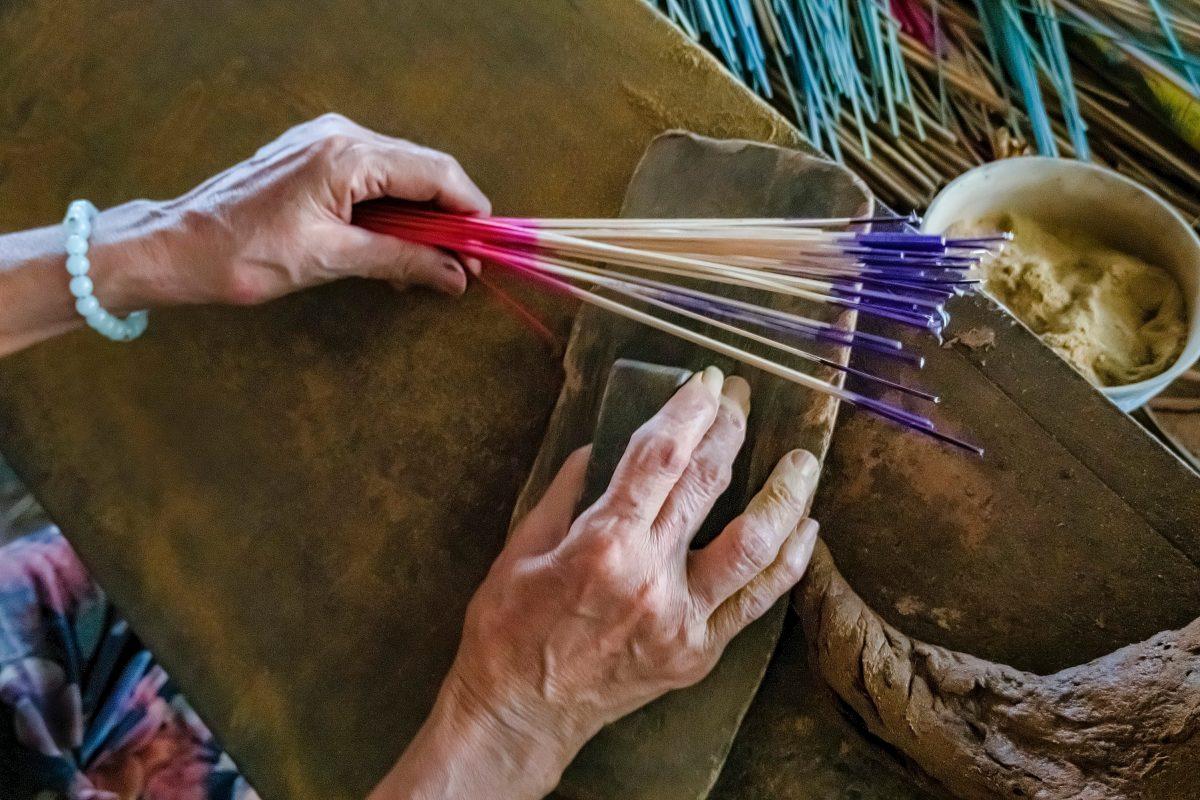
The process begins with thin, straight bamboo sticks. The sticks must be cut and prepared consistently so the finished incense can burn evenly and remain easy to handle. Their lower sections may be dyed in vivid colors, creating the striking displays now associated with Thuy Xuan.
4.2. Creating the Fragrant Mixture
Artisans combine aromatic plant materials with binding ingredients to form a workable mixture. Recipes vary and may represent knowledge developed within individual families. Visitors should therefore avoid assuming that every workshop uses the same fragrance, proportions, or materials.
4.3. Forming the Incense
Artisans combine aromatic plant materials with binding ingredients to form a workable mixture. Recipes vary and may represent knowledge developed within individual families. Visitors should therefore avoid assuming that every workshop uses the same fragrance, proportions, or materials.
4.4. Drying and Bundling
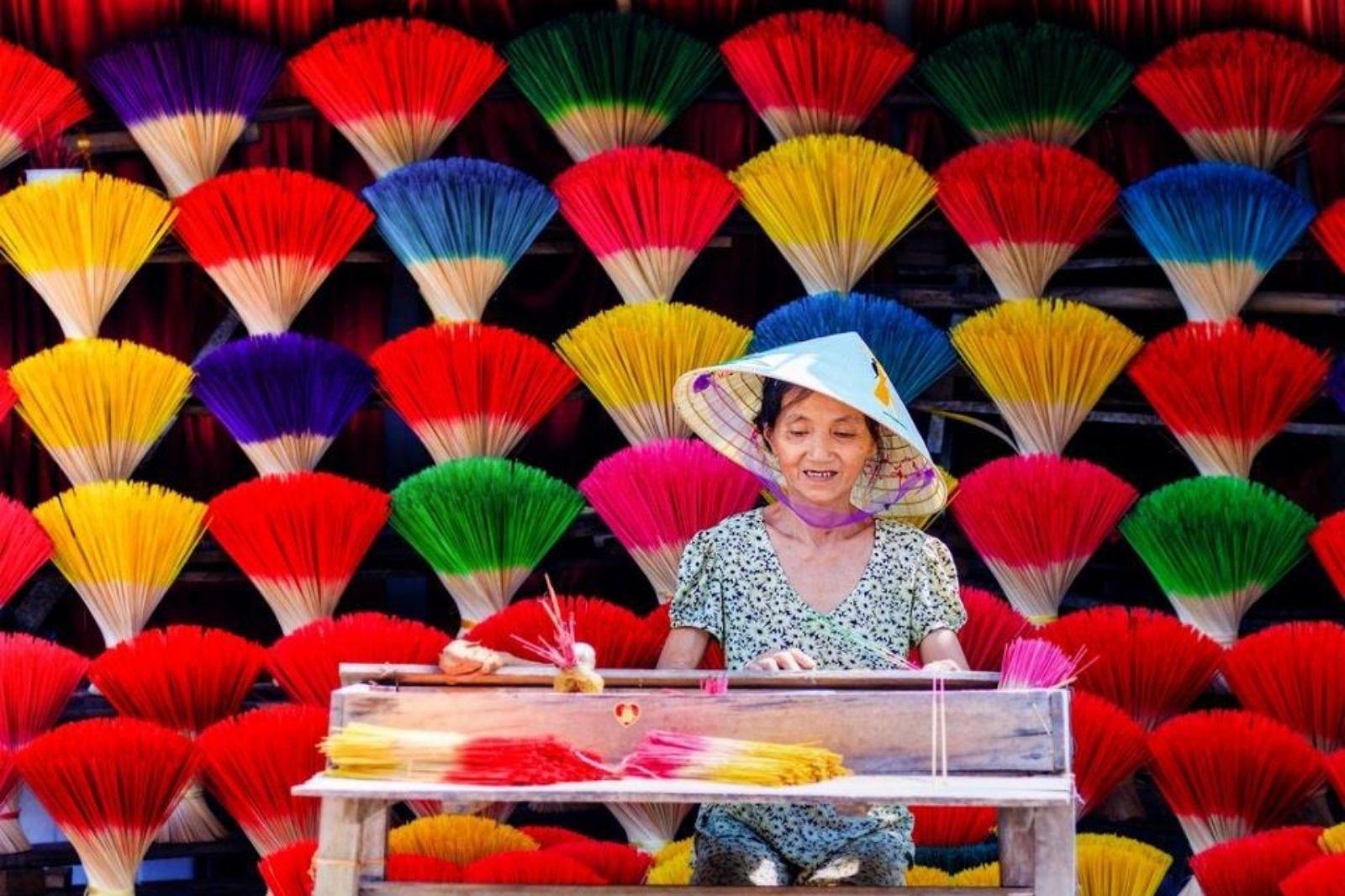
Fresh incense must dry before it can be packaged or used. Weather conditions affect this stage, and sunny days are helpful for outdoor drying. Once ready, the sticks are collected into neat bundles. At incense making village Hue, artisans often spread brightly colored sticks into circular shapes that resemble flowers, creating both an effective display and a memorable visual identity.
5. What to Experience at Thuy Xuan Incense Village
5.1. Watch Local Artisans at Work
The most valuable part of a visit is observing the craft itself. Depending on the time, weather, and workshop schedule, visitors may see different production stages. A local artisan or guide can explain how the sticks are prepared, how fragrances vary, and how the finished incense is used.
5.2. Try Making an Incense Stick
Some workshops allow visitors to try a simple part of the process under guidance. This short activity shows how much coordination is needed to create a straight, evenly covered stick. Availability is not guaranteed, so travelers specifically interested in a hands-on activity should arrange it in advance.
5.3. Photograph the Colorful Displays
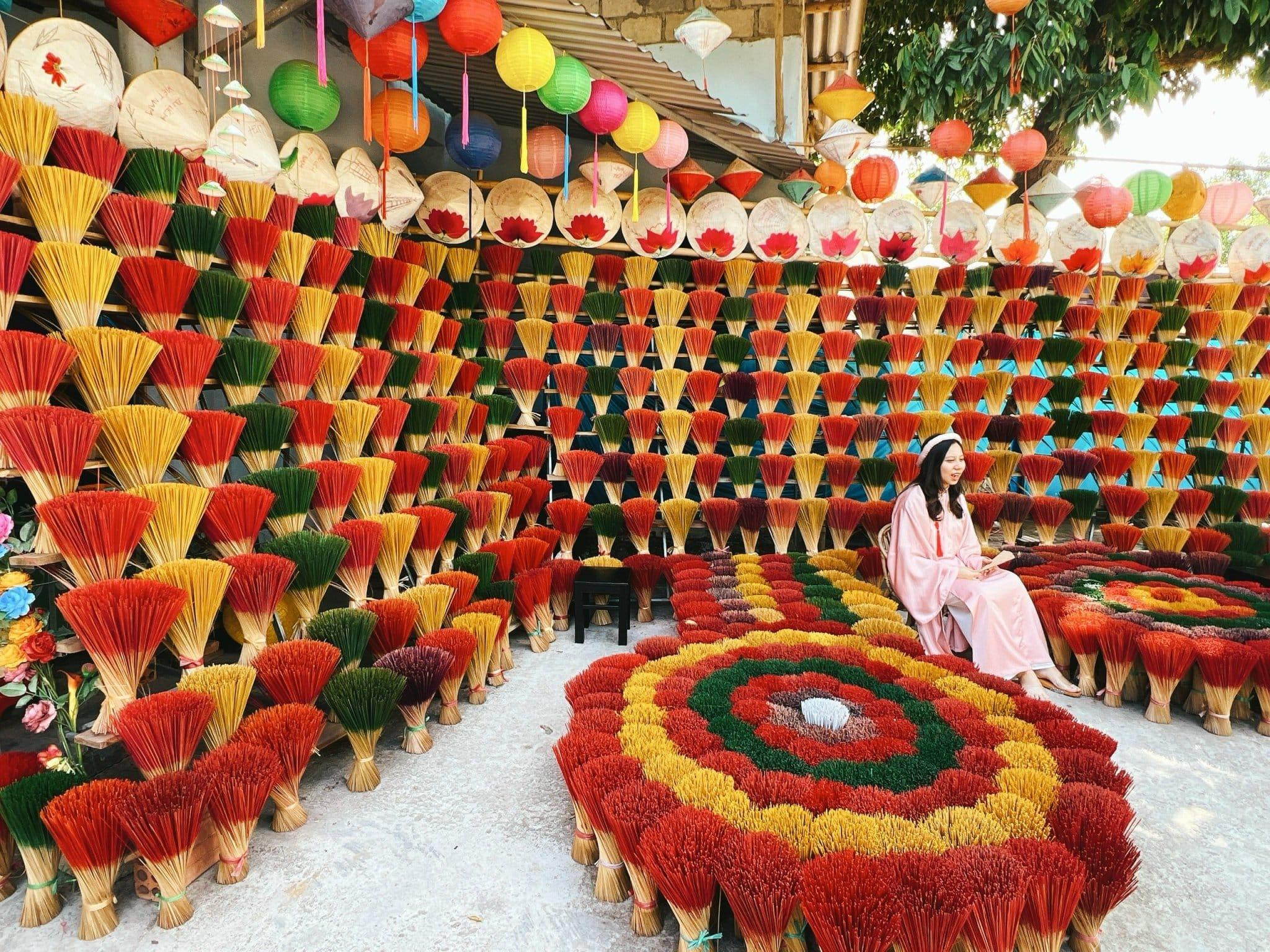
The vibrant incense clusters are the most photographed feature of incense making village Hue. For more attractive images, look for balanced patterns and allow the incense to remain the main subject. Morning or late-afternoon light is usually gentler than strong midday sunlight. Always ask before entering a display or photographing artisans closely.
5.4. Buy a Locally Made Souvenir
Purchasing incense or another locally made item is a practical way to support participating households. Ask about fragrance and intended use before choosing a product. If you are traveling internationally, check the plant-product and customs rules of your destination before packing incense in your luggage.

6. The Best Time to Visit
The incense making village Hue can be visited throughout the year, but dry weather makes it easier to see outdoor displays and photograph incense in natural light. Hue can become hot during warmer months, so mornings and later afternoons are generally more comfortable. The rainy season brings softer light and fewer visitors on some days, but heavy rain may limit outdoor production and displays.
Around 45 to 90 minutes may suit travelers who want to look around, meet an artisan, try a short activity, and buy a souvenir. Visitors interested in craft heritage may stay longer with a guide.
Because Thuy Xuan consists of independent workshops rather than one attraction, opening arrangements can vary. Confirm details with a chosen workshop or tour organizer, particularly during holidays or periods of severe weather.
7. Responsible Photography and Visitor Etiquette
Photographs help share the beauty of incense making village Hue, but the workshops are also places of work. Ask permission before posing inside a display, moving objects, using professional equipment, or taking close portraits. Do not step on incense sticks or block artisans while they are preparing products.
If a shop has created an elaborate display for visitors, consider supporting the household by buying a small product or joining an offered activity. This is more respectful than using the setting extensively and leaving without acknowledging the time and work involved. Prices and photography arrangements may differ between shops, so ask politely rather than assuming.
Families, including children, may be present around the workshops. Obtain clear permission before photographing any person and respect a refusal. Responsible behavior keeps the experience comfortable for residents and helps tourism contribute positively to the craft community.
8. Attractions to Combine with Thuy Xuan
The location of incense making village Hue makes it convenient to combine with several major attractions. Tu Duc Tomb is nearby and is admired for its landscaped grounds, pavilions, water, and reflective atmosphere. Vong Canh Hill offers views across the Perfume River landscape and can be especially appealing later in the day.
Travelers can continue to other Nguyen Dynasty tombs, Thien Mu Pagoda, or the Imperial City. A craft village, one royal tomb, and a scenic viewpoint create a rewarding half-day route.
Food and craft experiences also work well together. After visiting incense making village Hue, travelers can join a cooking class, explore a local market, or take an evening food tour. These activities reveal how craft knowledge, family traditions, and regional ingredients continue to shape contemporary Hue.

9. Explore Hue with Hue Local Experience
Visiting incense making village Hue becomes more meaningful when a local guide explains the people, traditions, and skills behind the colorful displays. Join a Hue craft village tour to meet artisans and discover how heritage survives in everyday life, or choose a Hue city tour combining Thuy Xuan with royal tombs, pagodas, and other important landmarks.
Travelers can also explore rural communities on a Hue countryside tour, prepare regional dishes during a hands-on Hue cooking class, or taste local specialties on a Hue night food tour. These experiences from Hue Local Experiences help visitors move beyond sightseeing and connect with the former imperial capital through its crafts, cuisine, landscapes, and residents.
10. Why Thuy Xuan Is More Than an Instagram Stop
The flower-like bundles are photogenic, but Thuy Xuan represents far more than a social-media backdrop. Every display begins with local knowledge, manual skill, family enterprise, materials, and time.
Tourism can help sustain incense making village Hue when visitors engage thoughtfully. Watching a demonstration, asking about the craft, buying a locally made item, and learning about incense in Vietnamese culture all create a richer experience than taking photographs alone.
The village also broadens the way travelers understand Hue. Heritage continues not only in palaces and royal tombs but also in workshops, family altars, gardens, markets, and neighborhood traditions.
11. Conclusion: Discover the Fragrant Soul of Hue
With its brilliant colors, gentle fragrances, and long craft tradition, incense making village Hue is one of the former imperial capital’s most distinctive cultural destinations. Thuy Xuan offers beautiful photographs, but its real appeal comes from the people who continue to prepare, shape, dry, and sell incense as part of a living family craft.
A respectful visit adds a valuable dimension to any Hue itinerary. By observing the process, listening to local stories, purchasing thoughtfully, and exploring nearby heritage sites, travelers can experience the village as more than a quick roadside stop. The result is a closer connection with Hue’s creativity, spirituality, and everyday cultural life.
Follow the colors, discover the craft, and let the fragrance of Thuy Xuan lead you into the living heritage of Hue.
0 Comment