

Vietnam Culture is more than ancient temples, traditional clothing, and famous festivals. It can be found in the way families share meals, younger people greet their elders, communities remember their ancestors, and local cooks transform seasonal ingredients into distinctive regional dishes.
Although Vietnam has a strong national identity, its culture is not uniform. Customs vary between northern, central, and southern Vietnam, while urban life may be very different from life in farming or mountain communities. The country’s officially recognized ethnic groups also contribute their own languages, clothing, architecture, music, food, and spiritual practices.
Understanding Vietnam Culture can therefore make a journey more meaningful. Travelers begin to see monuments not only as attractions but as parts of a living cultural story. Markets, family kitchens, farms, festivals, and craft villages can become places to learn how history and tradition continue to influence everyday life.

Understanding Vietnamese Culture Beyond Famous Landmarks
Show table of content
- 1. What Is the Culture of Vietnam?
- 2. The Values at the Heart of Vietnamese Culture
- 2.1. Family and respect for elders
- 2.2. Community and social harmony
- 2.3. History, Beliefs, and Spiritual Traditionsy
- 2.4. Remembering ancestors
- 3. Vietnamese Food as an Expression of Culture
- 4. Festivals, Clothing, Arts, and Everyday Traditions
- 4.1. Tết and family reunion
- 4.2. The áo dài and traditional arts
- 5. Regional and Ethnic Diversity in Vietnam
- 6. Vietnamese Etiquette and Practical Tips for Travelers
- 7. Best Time to Visit Tu Hieu Pagoda
- 8. Experiencing Vietnamese Culture Through Local Life
- 9. Conclusion
1. What Is the Culture of Vietnam?
Vietnam Culture includes the values, beliefs, customs, arts, food traditions, and social practices shared by communities throughout the country. It includes tangible heritage – such as buildings, clothing, crafts, and monuments – as well as intangible heritage, including music, ceremonies, stories, culinary knowledge, and community rituals.
Vietnam officially recognizes 54 ethnic groups. The Kinh, also known as the Việt, form the majority, while communities such as the Tày, Thái, Mường, Chăm, Khmer, Dao, and H’Mông contribute to the country’s cultural diversity. Each community has developed its own traditions in response to its history, environment, livelihood, and relationships with neighboring groups. More information is available from the Government of Vietnam’s introduction to the country’s ethnic groups.
Geography also plays an important role in shaping Vietnam Culture. Life in the northern mountains differs from life in the Red River Delta, the central coast, the Central Highlands, or the Mekong Delta. Climate and landscape influence local architecture, farming methods, ingredients, occupations, and festivals.
Vietnamese culture should therefore be understood as a combination of shared identity and local diversity. No single dish, costume, ceremony, or destination can represent the whole country.

2. The Values at the Heart of Vietnam Culture
2.1. Family and respect for elders
Family is one of the strongest foundations of Vietnam Culture. Many people maintain close relationships with parents, grandparents, siblings, and extended relatives, even when education or employment takes them to another province or country.
Respect for older people can be seen in greetings, conversations, seating arrangements, and family occasions. Vietnamese pronouns often reflect age and social relationships. Words such as anh, chị, cô, and chú can be used for people outside the family, helping speakers establish an appropriate and respectful relationship.
Older family members may be greeted first at a gathering, while important decisions can involve consultation among several generations. However, expectations differ between families, regions, and age groups. Modern Vietnamese households do not all follow traditional practices in precisely the same way.
Community relationships are also important. Neighbors may help one another during significant family events, festivals, difficult periods, or agricultural work. In villages, communal houses and local markets may function as spaces for social as well as economic activity.
Hospitality is another widely recognized value. A visitor to a Vietnamese home may be offered tea, fruit, or a meal. Accepting a small amount is usually a polite way to acknowledge the host’s generosity.
Social harmony often influences communication. A direct refusal may sometimes be avoided if it could cause embarrassment. Travelers should listen to tone and context rather than interpreting every “maybe” as a definite agreement.

2.2. Community and social harmony
Vietnam Culture has developed through indigenous traditions, cultural exchange, imperial dynasties, colonial history, periods of conflict, and continuing modernization. These influences can be seen in language, architecture, family structures, religious buildings, food, and artistic traditions.
Vietnam does not have one uniform religious system. Buddhism, Confucian thought, Taoist traditions, Christianity, local folk beliefs, and the spiritual practices of different ethnic communities all contribute to the country’s cultural landscape.
For many people, these influences overlap. A family might visit a pagoda, maintain an ancestral altar, observe a local ceremony, and celebrate a modern family occasion without seeing those activities as contradictory.

2.3. History, Beliefs, and Spiritual Traditionsy
Vietnam Culture has developed through indigenous traditions, cultural exchange, imperial dynasties, colonial history, periods of conflict, and continuing modernization. These influences can be seen in language, architecture, family structures, religious buildings, food, and artistic traditions.
Vietnam does not have one uniform religious system. Buddhism, Confucian thought, Taoist traditions, Christianity, local folk beliefs, and the spiritual practices of different ethnic communities all contribute to the country’s cultural landscape.
For many people, these influences overlap. A family might visit a pagoda, maintain an ancestral altar, observe a local ceremony, and celebrate a modern family occasion without seeing those activities as contradictory.

2.4. Remembering ancestors
Ancestor veneration is an important practice in many Vietnamese households and a meaningful part of Vietnam Culture. A family altar may display photographs, flowers, fruit, incense, or symbolic offerings. It creates a place where family members can remember deceased relatives and express gratitude toward earlier generations.
Offerings or memorial meals may be prepared on death anniversaries, during Tết, or on other important occasions. The details vary according to household tradition, region, and personal belief.
Travelers exploring Vietnam Culture may also encounter pagodas, temples, shrines, churches, and communal houses. These buildings do not all serve the same purpose. Visitors should observe local signs, speak quietly, dress respectfully, and avoid touching religious objects without permission.

3. Vietnamese Food as an Expression of Culture
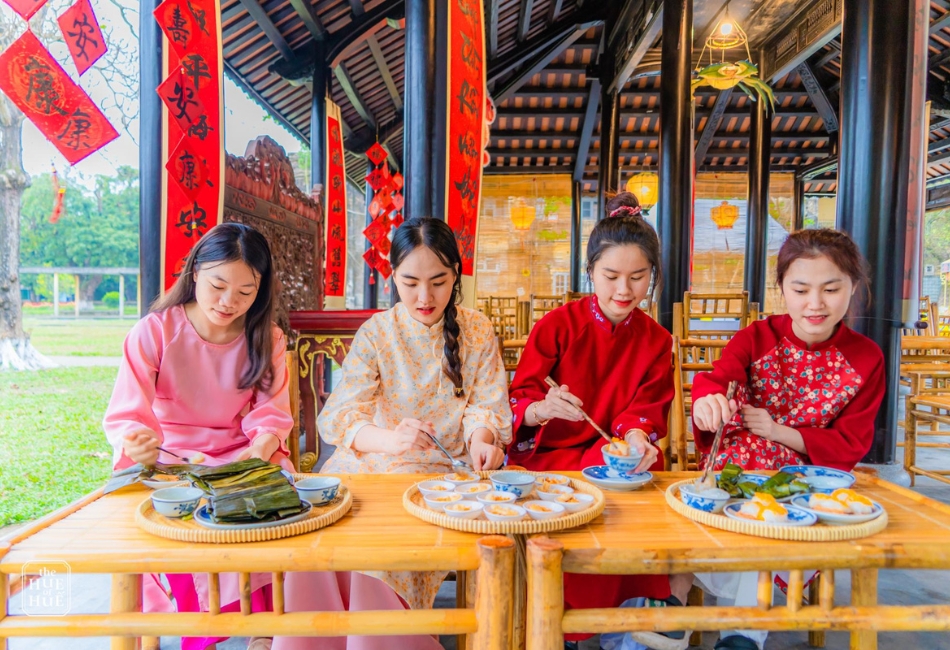
Food provides one of the most immediate ways to understand Vietnam Culture. A meal reveals connections between family, hospitality, geography, agriculture, history, and seasonal ingredients.
Vietnamese meals are frequently served family-style. Several dishes are placed in the center of the table, allowing diners to share vegetables, soup, meat, fish, tofu, rice, and dipping sauces. Inviting a guest to eat can be a natural expression of welcome and care. Vietnam’s official tourism website also describes shared meals as an important element of local hospitality in its guide to Vietnamese people and everyday customs.
Markets are equally important to the country’s food culture. They connect farmers, cooks, sellers, and households. A morning market may contain fresh herbs, seasonal vegetables, noodles, rice products, fruit, seafood, meat, and ingredients used in local dishes.
4. Festivals, Clothing, Arts, and Everyday Traditions
4.1. Tết and family reunion
Festivals reveal how Vietnam Culture connects family, spirituality, seasonal change, history, and community identity.
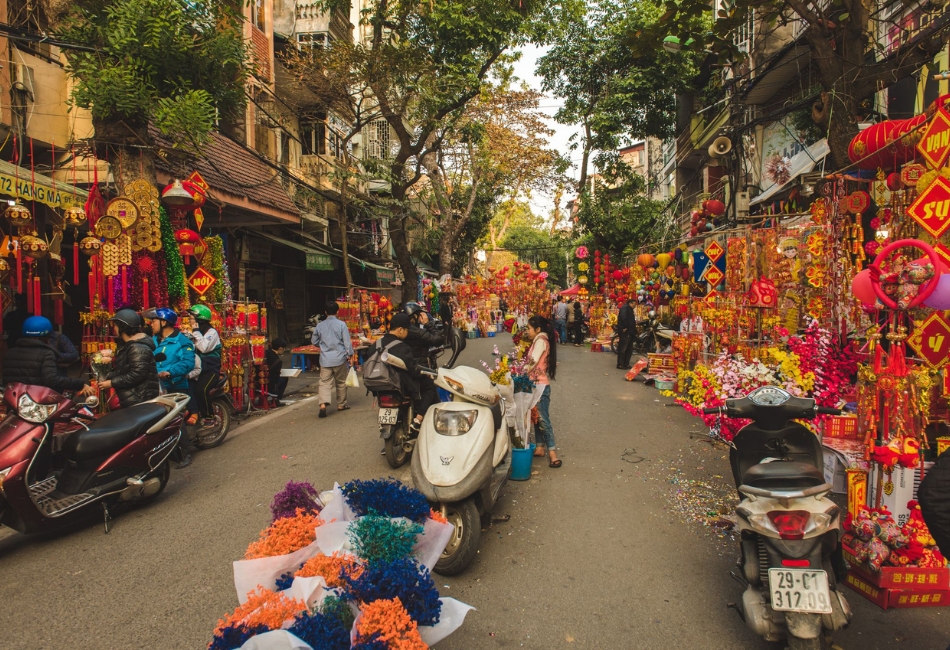
Tết Nguyên Đán, commonly known as Tết, is the Vietnamese Lunar New Year and the country’s most important annual celebration. It is a time for family reunions, ancestor remembrance, home decoration, traditional food preparation, visits to relatives, and hopes for a positive new beginning.
Tết customs vary across regions. Northern families commonly prepare bánh chưng, while bánh tét is more popular in many central and southern communities. Flowers, decorations, festive dishes, and household practices also differ, reflecting the regional diversity of Vietnam Culture. The official guide to Tết in Vietnam explains how food, family, and reunion shape this meaningful celebration.
International visitors traveling during Tết should plan ahead. Transport can become crowded, while family-run restaurants, shops, and other businesses may close or adjust their opening hours as people return to their hometowns.
4.2. The áo dài and traditional arts
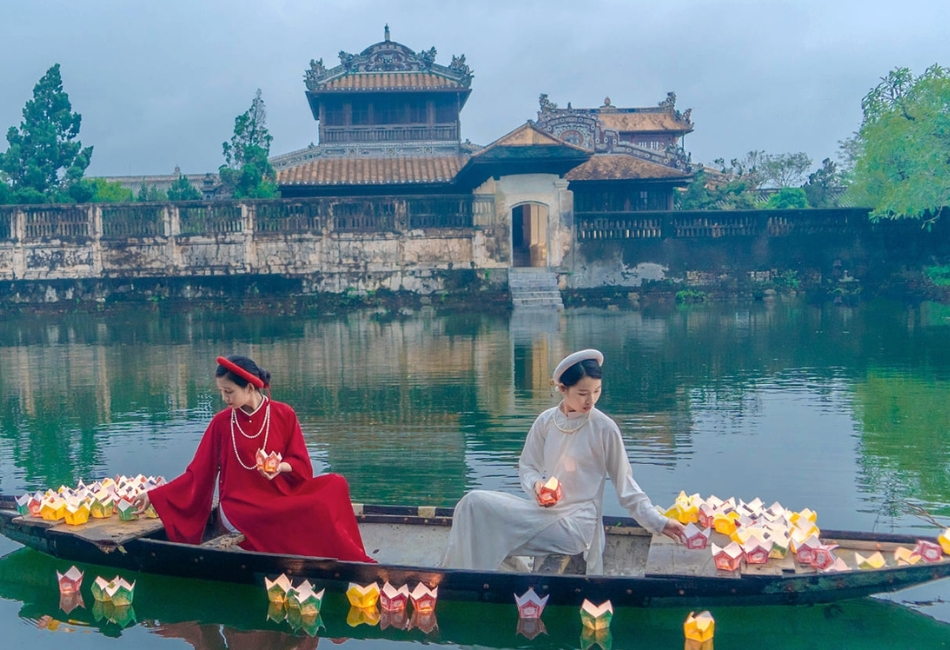
The áo dài is one of Vietnam’s most recognizable forms of traditional clothing and an enduring symbol of Vietnam Culture. It consists of a long tunic worn over trousers and appears at weddings, school ceremonies, festivals, formal events, and during Tết.
The garment has continued to change in color, fabric, and design. It is therefore both a cultural symbol and part of contemporary fashion. The country’s official tourism website provides a useful introduction to the history and modern use of the áo dài.
Traditional arts play an important role in Vietnam Culture and vary across the country. They include ceramics, embroidery, silk weaving, lacquerware, woodcarving, folk painting, music, and performance. Some arts are closely connected to particular communities or places.
In Huế, Nhã nhạc – Vietnamese court music – is associated with the former royal court and has been recognized by UNESCO as intangible cultural heritage. Traditional craft villages around the city also preserve knowledge connected with paper flowers, folk paintings, incense, conical hats, and other handmade products.
5. Regional and Ethnic Diversity in Vietnam
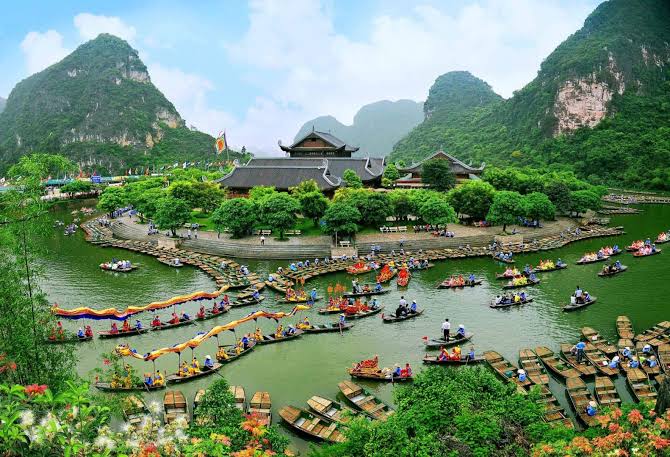
Regional diversity is essential to understanding Vietnam Culture. Visitors may notice differences in accents, food, architecture, weather, social customs, and daily rhythms as they travel through the country.
Northern Vietnam includes major historical centers such as Hà Nội, rice-growing areas in the Red River Delta, traditional craft villages, and mountain communities with distinctive cultural identities.
Central Vietnam includes former imperial heritage, agricultural villages, coastal communities, and regional cuisines shaped by a demanding climate. Huế is especially known for its royal monuments, spiritual sites, traditional music, local crafts, and distinctive culinary traditions.
Southern Vietnam includes the dynamic urban environment of Hồ Chí Minh City and the river-based communities of the Mekong Delta. Its history, climate, trading connections, and agricultural landscape contribute to different foods and patterns of everyday life.
Differences also exist between rural and urban communities. Young people in cities may follow global trends while continuing to celebrate Tết, join family memorial occasions, and respect traditions at home. In rural areas, farming cycles, local markets, and community relationships may be more visible in daily routines.
Travelers should avoid using one destination to define the entire country. A performance, village visit, or traditional costume represents a specific community and context – not every Vietnamese person.

6. Vietnamese Etiquette and Practical Tips for Travelers
Respectful behavior helps travelers engage with Vietnam Culture without needing to understand every local custom. Being observant, patient, and willing to learn is usually more important than following a perfect list of rules.
Keep these practical tips in mind:
- Dress modestly when visiting pagodas, temples, communal houses, and religious sites.
- Follow instructions about removing shoes before entering particular spaces.
- Ask permission before photographing people, homes, altars, or ceremonies.
- Greet older members of a family or group first.
- Give and receive important items with the right hand or both hands.
- Avoid touching religious objects unless permission has been given.
- Speak calmly when resolving misunderstandings.
- Avoid making insensitive comments about history, religion, or local customs.
- Learn simple expressions such as xin chào for hello and cảm ơn for thank you.
- Observe how local people behave when you are unsure.
Public anger or confrontation can cause discomfort and rarely helps solve a problem. A calm explanation, polite tone, and patience are generally more effective.
Etiquette can also change according to the setting. Behavior appropriate in a rural family home may differ from what is expected in a modern hotel, restaurant, or café. Travelers can consult the official Vietnamese etiquette guide before their trip.
7. Experiencing Vietnamese Culture Through Local Life
Museums, monuments, and historic buildings provide valuable context, but travelers can also experience Vietnam Culture through ordinary daily activities.
Visiting a morning market can reveal how people select fresh ingredients and shop according to the season. A cooking class can introduce regional techniques, dipping sauces, herbs, and the custom of sharing dishes. A craft village may demonstrate how practical skills and cultural knowledge pass between generations.
Agricultural experiences provide another perspective. Farming is connected to Vietnam’s landscapes, local ingredients, village relationships, and household cooking. Learning about seasonal vegetables or traditional food preparation can help travelers understand why dishes differ across regions and times of year.
In Huế, cultural discovery can combine the Imperial City, royal tombs, pagodas, markets, countryside, and craft villages. This allows visitors to see the relationship between imperial history and contemporary local life.
Madam Thu Farm fits naturally within this broader story of food, farming, and community in Huế. A locally focused experience does not represent all of Vietnam, but it can offer a closer look at how ingredients, seasons, cooking knowledge, and everyday relationships come together in one region.
Travelers should check the current availability of farm-related experiences before planning a visit.
To experience Vietnam Culture beyond museums and historical landmarks, explore the carefully designed tours offered by Hue Local Experiences. Join a Hue Cooking Class to prepare traditional dishes with local guidance, taste regional specialties on a Hue Food Tour, discover rural life through a Hue Countryside Tour, or meet skilled artisans during a Traditional Craft Village Experience. Each activity provides a different perspective on Huế’s food, people, traditions, and everyday life, helping travelers build a more meaningful connection with the city and its local communities.


8. Conclusion: Discovering the Living Culture of Vietnam
Vietnam Culture is a living combination of family relationships, spiritual practices, regional identities, shared meals, festivals, crafts, and connections with the land. It cannot be represented by one dish, costume, historical site, or ceremony.
Travelers gain a deeper understanding when they look beyond famous attractions and pay attention to daily life. A market visit, home-style meal, cooking class, craft workshop, or countryside experience can reveal how traditions continue to change while remaining meaningful.
To explore Vietnam Culture through local ingredients, food traditions, and community life in Huế, discover the experiences connected with Madam Thu Farm and check which activities are currently available for your travel dates.
0 Comment