
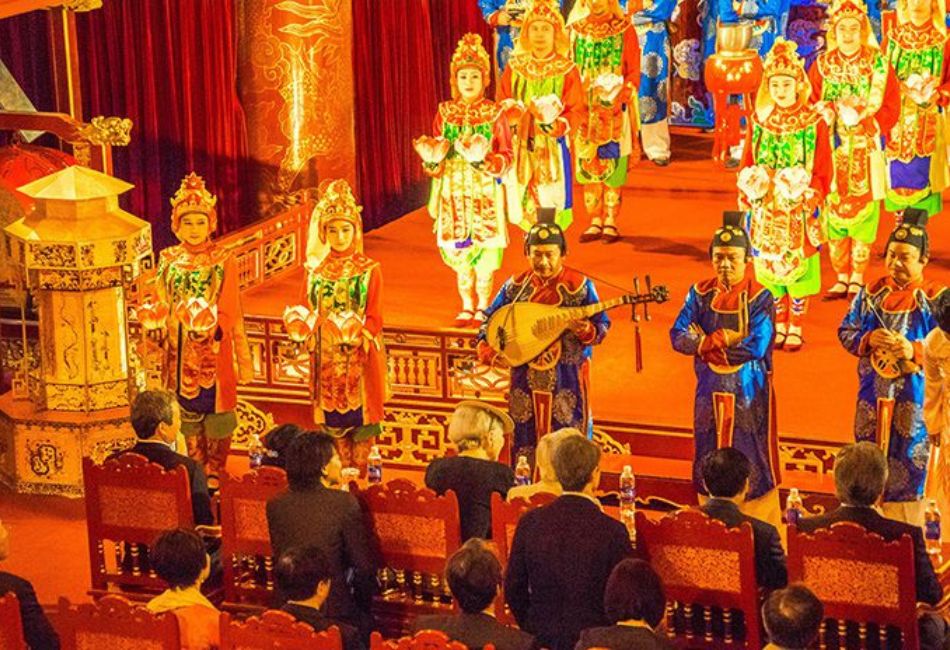
Hue is one of Vietnam’s most fascinating cultural destinations, where ancient architecture, traditional cuisine, and historical traditions come together. Once the imperial capital of the Nguyen Dynasty, the city preserves a remarkable heritage that continues to attract travelers from around the world. Among its most valuable cultural treasures is Hue Royal Court Music, a traditional art form that offers a glimpse into Vietnam’s imperial past.
Known in Vietnamese as Nhã nhạc cung đình Huế, this elegant musical tradition was performed during important royal ceremonies, religious occasions, and official receptions. Its distinctive melodies, traditional instruments, and carefully choreographed performances reflect the sophistication of Vietnam’s former royal court.
Recognized by UNESCO as an Intangible Cultural Heritage of Humanity, Hue Royal Court Music remains an important symbol of Vietnamese cultural identity.
Whether you are interested in history, music, or authentic local experiences, discovering this tradition is a wonderful way to understand the cultural richness of Hue.

Discover the Beauty of Hue Royal Court Music
Show table of content
- 1. What Is Hue Royal Court Music?
- 2. The History of Hue Royal Court Music
- 3. Traditional Instruments Used in Hue Royal Court Music
- 4. What Makes Hue Royal Court Music Unique?
- 5. Where to Experience Hue Royal Court Music
- 6. Tips for Enjoying Hue Royal Court Music
- 7. Explore More of Hue’s Cultural Heritage
- 8. Conclusion: Experience the Timeless Beauty of Hue Royal Court Music
1. What Is Hue Royal Court Music?
Hue Royal Court Music, known as Nhã nhạc, literally means “elegant music.” It refers to a collection of musical and dance traditions associated with the Vietnamese royal court, particularly during the Nguyen Dynasty, which ruled from 1802 to 1945.
Unlike ordinary folk music, this tradition was closely connected to formal ceremonies and royal rituals. Performances accompanied significant occasions such as coronations, royal anniversaries, religious ceremonies, and official receptions.
Hue Royal Court Music combines instrumental performances, traditional singing, and ceremonial dance. Each element follows established artistic conventions, creating a refined experience that reflects the dignity and symbolism of the imperial court.
Today, this music is performed for cultural preservation and for visitors who want to learn more about Vietnam’s traditional performing arts. Watching a performance allows travelers to appreciate not only the melodies but also the historical stories and cultural values behind them.

2. The History of Hue Royal Court Music
The development of Vietnamese court music spans several centuries, but it became particularly prominent under the Nguyen Dynasty. After establishing Hue as the imperial capital in 1802, the dynasty developed an elaborate royal court system in which music played an essential role.
Musicians and performers were trained to present specific compositions for different ceremonies. The repertoire, instruments, costumes, and performance arrangements followed established traditions that reflected the importance of each royal occasion.
During this period, Hue Royal Court Music flourished as a sophisticated art form supported by the imperial court. It also reflected cultural influences and artistic exchanges that shaped Vietnam’s historical musical traditions.
However, the end of the monarchy in 1945 and subsequent historical conflicts threatened the survival of this heritage. Without its original royal setting, maintaining the traditional repertoire and passing musical knowledge to younger generations became increasingly challenging.
Dedicated artists and cultural institutions continued working to preserve the tradition. Their efforts helped ensure that this distinctive part of Hue’s history could survive beyond the imperial era.
In 2003, UNESCO proclaimed Nha Nhac a Masterpiece of the Oral and Intangible Heritage of Humanity. In 2008, it was incorporated into UNESCO’s Representative List of the Intangible Cultural Heritage of Humanity.
This recognition highlighted the importance of preserving Hue Royal Court Music for future generations.
Learn more from UNESCO’s official page on Nha Nhac.
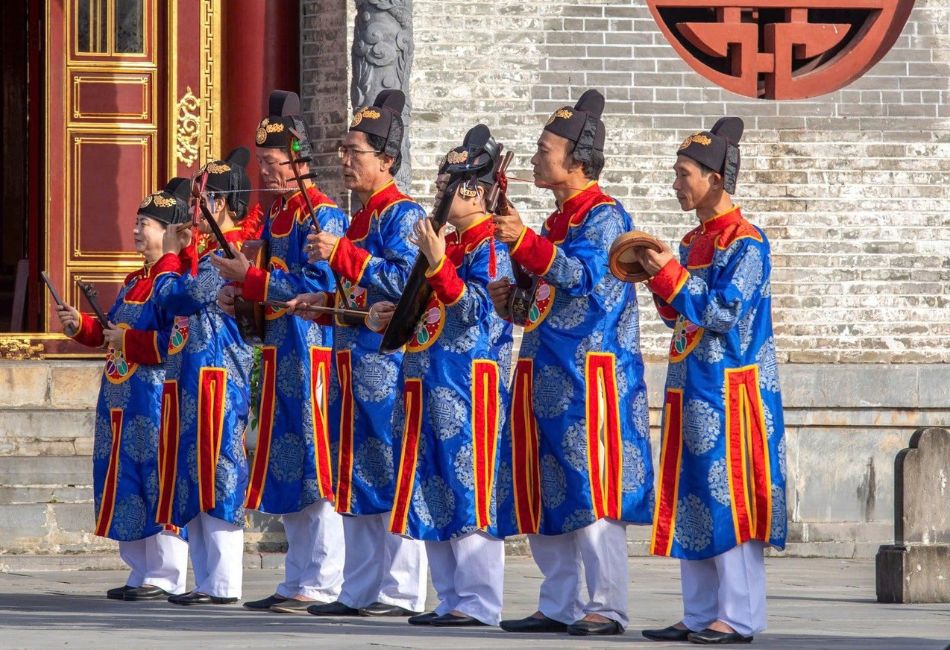
3. Traditional Instruments Used in Hue Royal Court Music
One of the most captivating features of Hue Royal Court Music is its distinctive sound. This sound comes from the combination of traditional instruments, each contributing a unique tone, rhythm, and musical texture.
Percussion instruments
Drums, gongs, and other percussion instruments establish the rhythm and structure of a performance. Their sounds can be powerful and ceremonial, helping create an atmosphere appropriate for formal occasions.
Wind instruments
Traditional flutes and various wind instruments contribute expressive melodies and distinctive tones. Their sounds add depth to the musical arrangement and complement the rhythmic patterns created by percussion.
String instruments
Traditional string instruments, including instruments such as the đàn nguyệt and đàn tranh, contribute melodic detail and expressive musical passages. Their tones can create a more delicate contrast with the stronger sounds of drums and gongs.
When these instruments are performed together, they create a complex musical texture that reflects the artistry of Vietnamese court musicians.
During a performance, pay attention to how the different instruments interact. The coordination between musicians is an important part of what makes Hue Royal Court Music such a memorable cultural experience.

4. What Makes Hue Royal Court Music Unique?
Several characteristics distinguish Hue Royal Court Music from other forms of traditional Vietnamese music.
Its ceremonial purpose is one of its most important features. The music was created and performed in connection with royal rituals, official receptions, and religious occasions. It was not simply entertainment but also an expression of the cultural values and authority of the imperial court.
Its formal structure is another defining characteristic. Performances traditionally followed established arrangements, requiring musicians to maintain precision, discipline, and coordination.
The combination of music and dance also contributes to its appeal. Some performances include elaborate costumes, symbolic movements, and traditional choreography that complement the music.
Finally, Hue Royal Court Music preserves an important connection to Vietnam’s imperial history. Its continued performance allows modern audiences to experience a tradition that once formed part of the cultural life of the Nguyen Dynasty.
For travelers, these qualities offer an opportunity to discover a different side of Vietnamese culture, beyond the country’s more widely known folk music and contemporary entertainment.
5. Where to Experience Hue Royal Court Music
If you are visiting Hue, there are several ways to discover traditional music and performing arts.
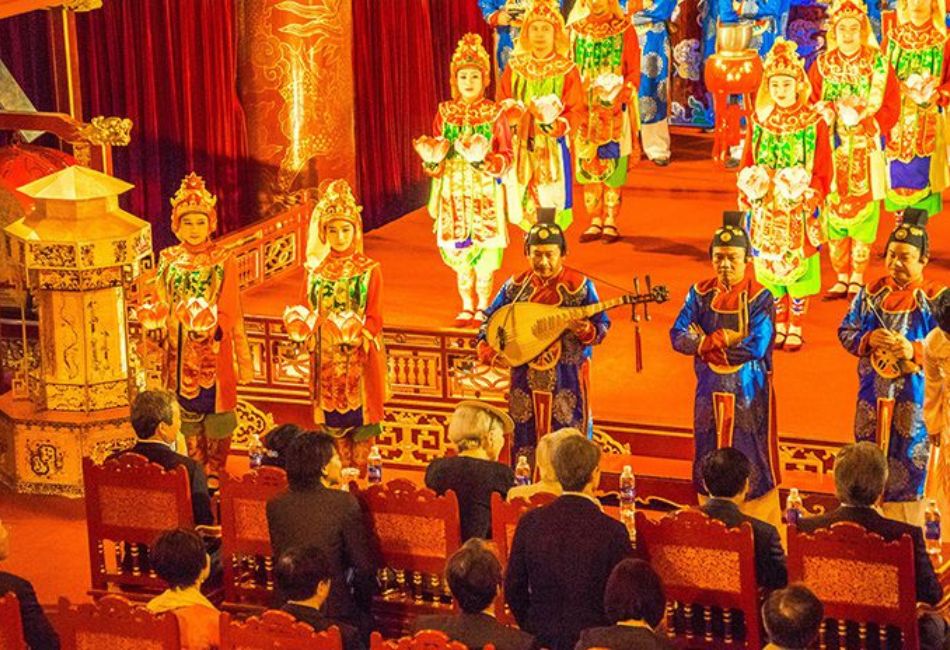
Duyet Thi Duong Royal Theatre
Located inside the Hue Imperial City, Duyet Thi Duong is a historic theatre associated with royal performances during the Nguyen Dynasty.
Today, visitors may have the opportunity to watch traditional music and dance in a setting closely connected to the city’s imperial heritage. The historic surroundings make the experience particularly meaningful for travelers interested in the history of the royal court.
Check current performance schedules and ticket information with the Hue Monuments Conservation Centre before visiting.
Traditional music on the Perfume River
The Perfume River is another important part of Hue’s cultural identity. Selected dragon boat cruises offer traditional music performances, allowing visitors to enjoy local culture while taking in the peaceful scenery along the river.
Depending on the operator and schedule, this can be a relaxing way to experience traditional Vietnamese music in the evening.
Confirm the type of performance included before booking, as not every cruise offers Hue Royal Court Music.
Cultural festivals and special events
Hue hosts cultural programs and festivals that showcase traditional performing arts throughout the year. Depending on the program, visitors may encounter court music, royal dance, traditional costumes, and other artistic performances.
Check official tourism announcements and local event schedules to find out what is available during your visit.

6. Tips for Enjoying Hue Royal Court Music
To make the most of your experience, consider these practical tips.
Learn about the history beforehand. Understanding the relationship between music and royal ceremonies will help you appreciate the performance more deeply.
Arrive early. Allow enough time to find your seat, explore the venue, and enjoy the historic surroundings.
Observe the costumes and movements. Traditional clothing, gestures, and choreography are important elements of the performance. Notice how they complement the music.
Respect the performance. Keep your phone silent, follow photography rules, and avoid disturbing the musicians or other audience members.
Combine music with other cultural activities. Visiting the Imperial City, exploring royal tombs, or sampling traditional Hue cuisine can give you a more complete understanding of the city’s heritage.
With a little preparation, watching Hue Royal Court Music can become one of the most memorable parts of your visit to central Vietnam.

7. Explore More of Hue’s Cultural Heritage
Hue’s cultural identity extends far beyond its imperial architecture and traditional music. The city is also famous for its distinctive cuisine, traditional gardens, craft villages, peaceful countryside, and welcoming local communities.
After discovering Hue Royal Court Music, consider exploring the city’s culinary heritage through a traditional Hue cooking class. Learning to prepare local specialties provides insight into the ingredients, cooking techniques, and family traditions that have shaped Hue’s food culture.
You can also visit local markets, explore nearby craft villages, or join a countryside tour to discover everyday life beyond the city center.
At Madam Thu Hospitality, visitors can explore Hue through local cuisine, cooking experiences, and countryside activities. These experiences offer another perspective on the traditions and people that make Hue special.
Explore our Hue Cooking Class, Hue Countryside Tours, and Hue Local Experiences to discover more of the city’s cultural and culinary heritage.
Combining historical attractions with authentic local experiences allows you to connect more deeply with Hue and create lasting travel memories.
8. Conclusion: Experience the Timeless Beauty of Hue Royal Court Music/h3>
Hue is a destination where Vietnam’s imperial past remains visible in its architecture, traditions, cuisine, and performing arts. Among these cultural treasures, Hue Royal Court Music stands out as a remarkable expression of the country’s artistic heritage.
From its historical role under the Nguyen Dynasty to its recognition by UNESCO, this tradition reflects the creativity, discipline, and dedication of generations of Vietnamese artists.
Whether you watch a performance inside the Imperial City or discover traditional music during a cultural excursion, take the time to appreciate the melodies, instruments, costumes, and stories behind the art form.
For travelers seeking to understand Hue beyond its famous landmarks, experiencing Hue Royal Court Music is a meaningful way to connect with the history and enduring cultural spirit of Vietnam’s former imperial capital.
Discover Hue with Madam Thu Hospitality and explore the city’s cuisine, traditions, and local experiences for a more meaningful journey through central Vietnam.
0 Comment