
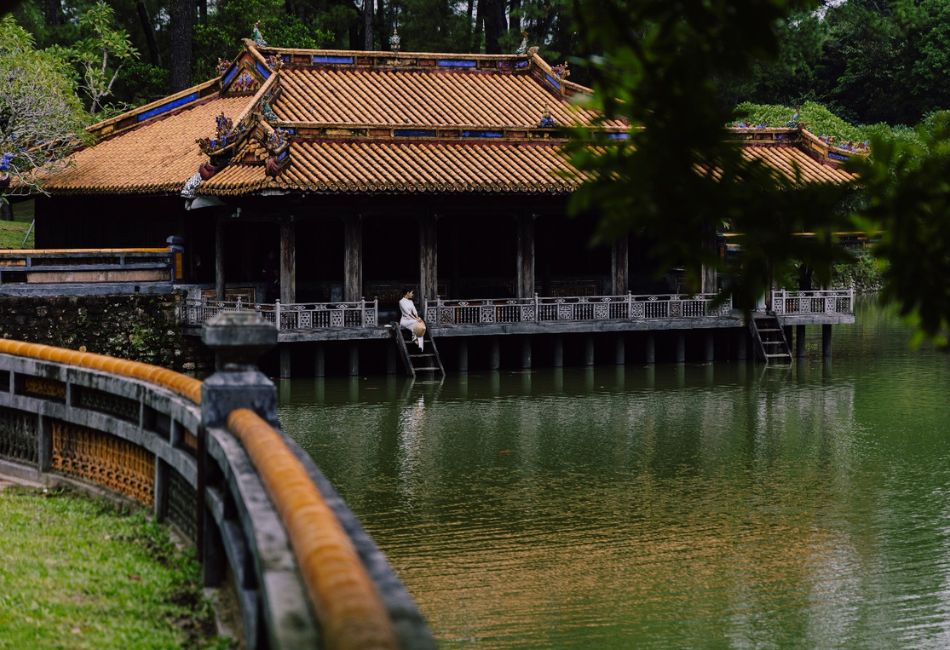
Hue is a city where history breathes quietly through moss-covered walls, tranquil rivers, and ancient pine forests. Once the imperial capital of Vietnam under the Nguyen Dynasty (1802–1945), Hue is home to a remarkable collection of royal mausoleums that reflect not only royal power but also deep philosophies of life, death, and harmony with nature.
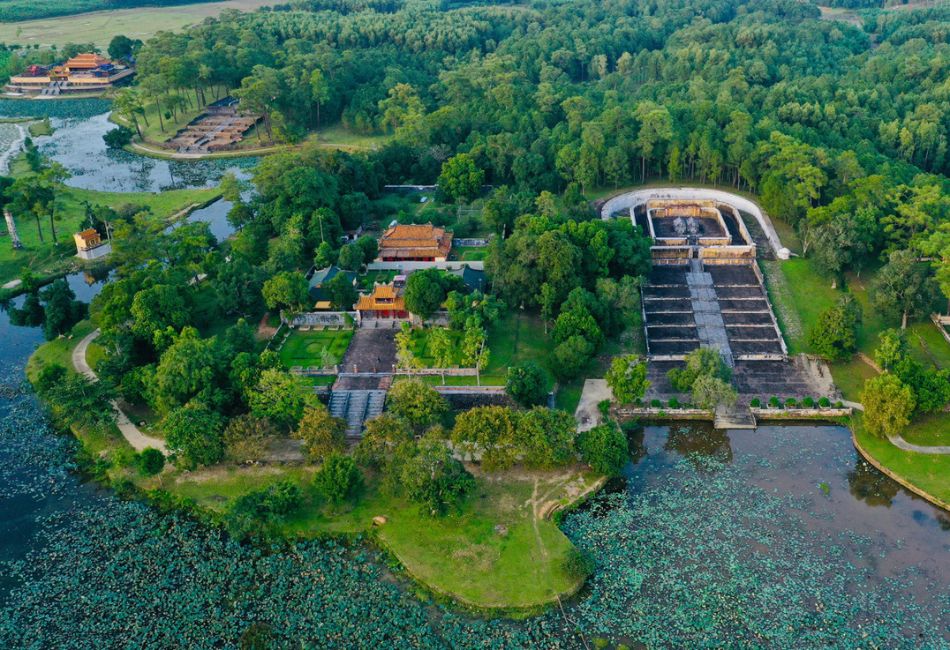
Scattered along the Perfume River and surrounding countryside, the Hue Royal Tombs are far more than burial sites. They are masterpieces of architecture, landscape design, and spiritual symbolism. Each tomb tells a personal story of an emperor – his ambitions, beliefs, and artistic taste.
If you are planning a trip to Hue, visiting the Hue Royal Tombs should be at the top of your list. In this guide, I will walk you through the most impressive tombs you should not miss, along with practical tips to help you explore them in a meaningful way.
Explore the History and Architecture of Hue Royal Tombs
Show table of content
- 1. Introduction to Hue Royal Tombs
- 2. Why the Royal Tombs Matter in Hue’s History
- 3. Tomb of Emperor Minh Mang – Harmony and Balance
- 3.1. Overview
- 3.2. Architecture and Layout
- 3.3. Why You Should Visit
- 4. Tomb of Emperor Tu Duc – Poetry and Melancholy
- 4.1. Overview
- 4.2. Atmosphere and Design
- 4.3. Why You Should Visit
- 5. Tomb of Emperor Khai Dinh – East Meets West
- 5.1. Overview
- 5.2. Architecture and Decoration
- 5.3. Why You Should Visit
- 6. Lesser-Known Hue Royal Tombs Worth Visiting
- 6.1. Tomb of Emperor Gia Long
- 6.2. Tomb of Emperor Dong Khanh
- 7. Best Ways to Visit the Hue Royal Tombs
- 8. Practical Travel Tips
- 9. Final Thoughts
1. Introduction to Hue Royal Tombs
The Nguyen emperors believed that death was a continuation of life rather than an end. As a result, they invested enormous effort into designing their tombs while still alive. These tombs served as places for reflection, leisure, and spiritual preparation long before becoming final resting places.
The Hue Royal Tombs are spread across hills, lakes, and forests west and south of the city. Their locations were carefully chosen according to feng shui principles, ensuring harmony between humans, nature, and the cosmos.
Today, these royal mausoleums form one of the most iconic cultural landscapes in Vietnam and are part of the UNESCO World Heritage Complex of Hue Monuments.
2. Why the Royal Tombs Matter in Hue’s History
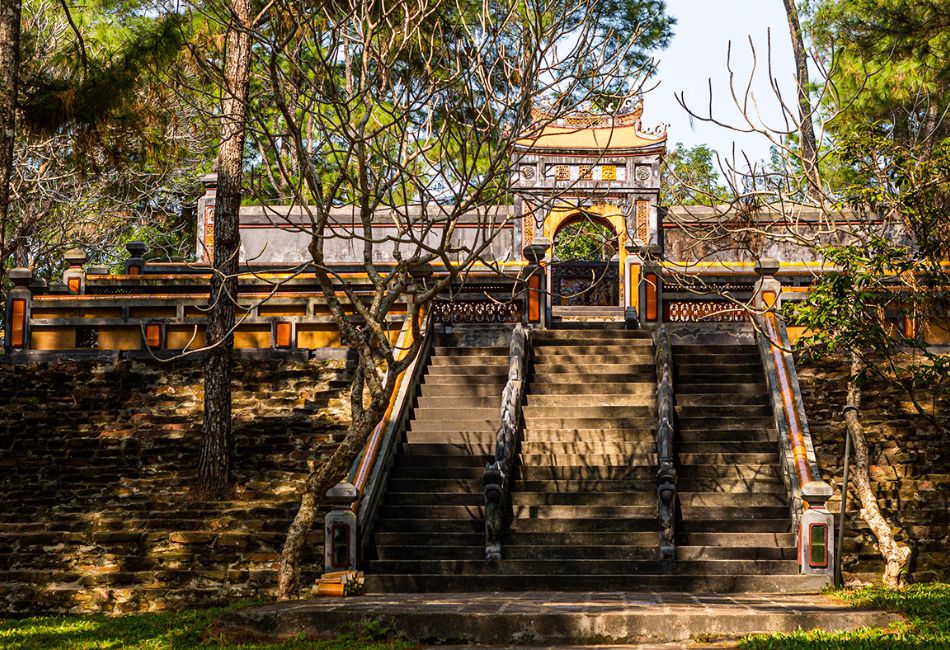
To truly understand Hue, you must understand its emperors. Each ruler left behind a tomb that mirrors his personality and reign.
Some emperors favored Confucian order and balance. Others leaned toward romance, poetry, or modern ambition. Together, the Hue Royal Tombs offer a rare glimpse into the inner world of Vietnam’s last royal dynasty.
Unlike many royal tombs around the world that feel solemn and distant, Hue’s tombs feel alive. Birds sing, lotus flowers bloom, and locals still pass through these spaces as part of daily life. This living connection between past and present is what makes the tombs so special.
3. Tomb of Emperor Minh Mang – Harmony and Balance
3.1. Overview
- Built: 1840–1843
- Location: 12 km west of Hue city
- Style: Traditional Vietnamese & Confucian
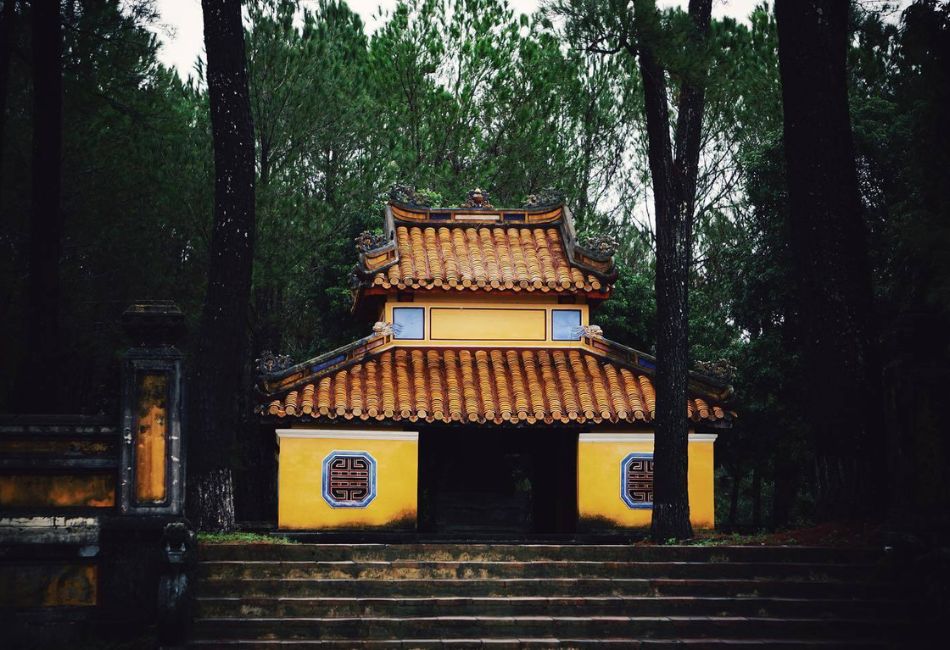
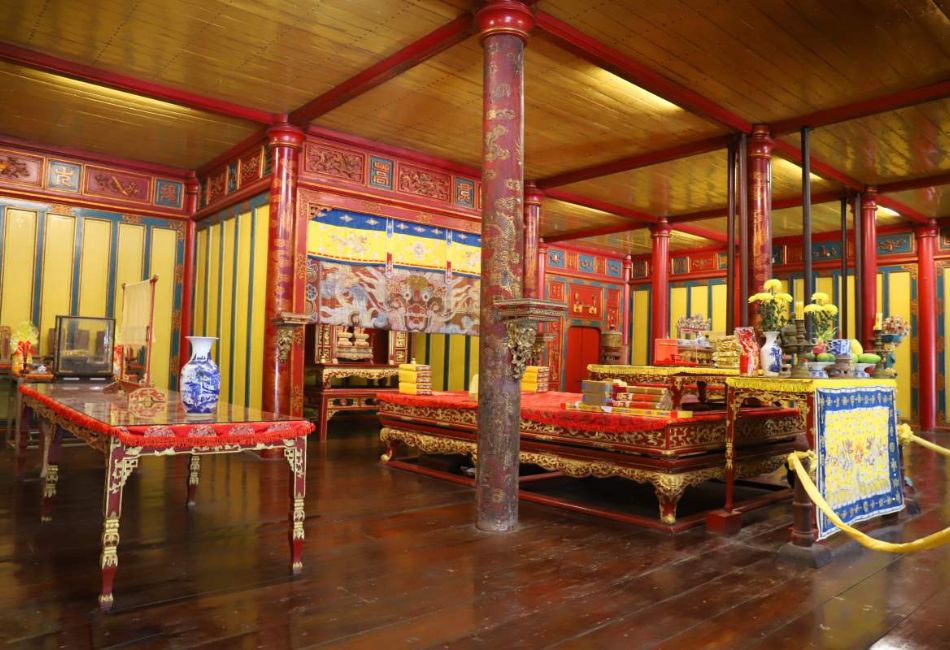
The Tomb of Minh Mang is often considered the most majestic among the Hue Royal Tombs. Emperor Minh Mang was a strong Confucian ruler who valued discipline, order, and harmony.
3.2. Architecture and Layout
The tomb is laid out along a perfectly symmetrical axis, stretching from the main gate to the emperor’s burial mound. Bridges, courtyards, temples, and lakes are aligned with mathematical precision.
Everything here feels balanced – water and land, open space and structures, movement and stillness.
3.3. Why You Should Visit
- Ideal for understanding Confucian philosophy
- Peaceful landscape with lakes and frangipani trees
- Perfect for slow walking and photography
Among all Hue Royal Tombs, Minh Mang’s tomb best represents classical Vietnamese imperial aesthetics.
4. Tomb of Emperor Tu Duc – Poetry and Melancholy
4.1. Overview
- Built: 1864 – 1867
- Location: 8 km from Hue city center
- Style: Romantic, poetic, introspective
If Minh Mang’s tomb reflects order, Tu Duc’s tomb reflects emotion.
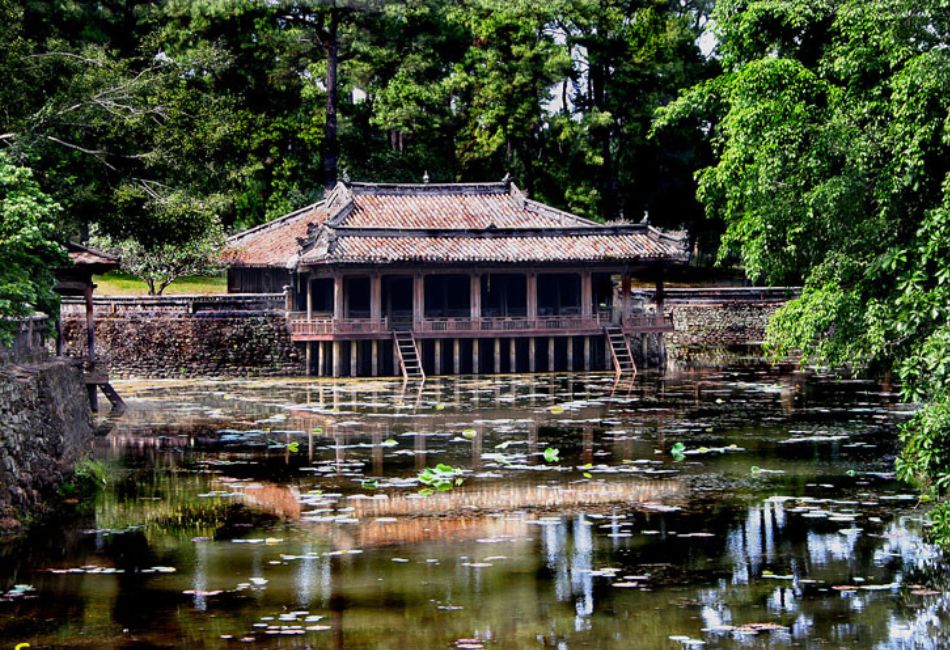
Emperor Tu Duc was a poet and scholar who lived a troubled life marked by illness, political pressure, and personal sorrow. His tomb feels less like a mausoleum and more like a royal retreat.
4.2. Atmosphere and Design
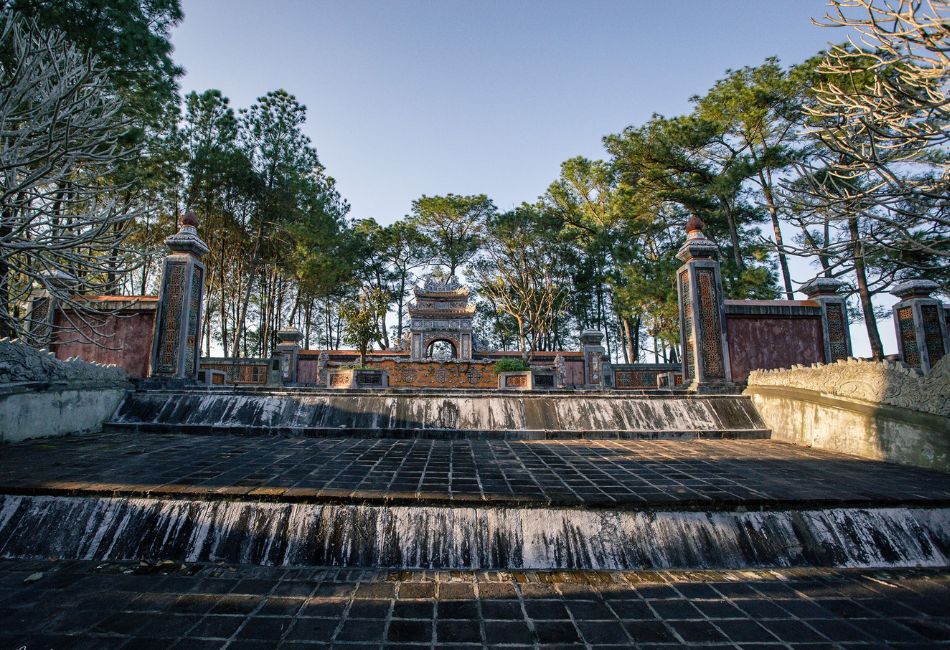
Set among pine forests and lakes, the complex includes pavilions where the emperor once wrote poetry and rested. Interestingly, Tu Duc is not actually buried here – his real burial site remains a mystery.
4.3. Why You Should Visit
- Most atmospheric and emotional among the Hue Royal Tombs
- Ideal for travelers who enjoy quiet, reflective spaces
- Beautiful during early morning or late afternoon
This tomb speaks softly, but it leaves a lasting impression.
5. Tomb of Emperor Khai Dinh – East Meets West
5.1. Overview
- Built: 1920–1931
- Location: Chau Chu Mountain
- Style: Fusion of Vietnamese and European architecture
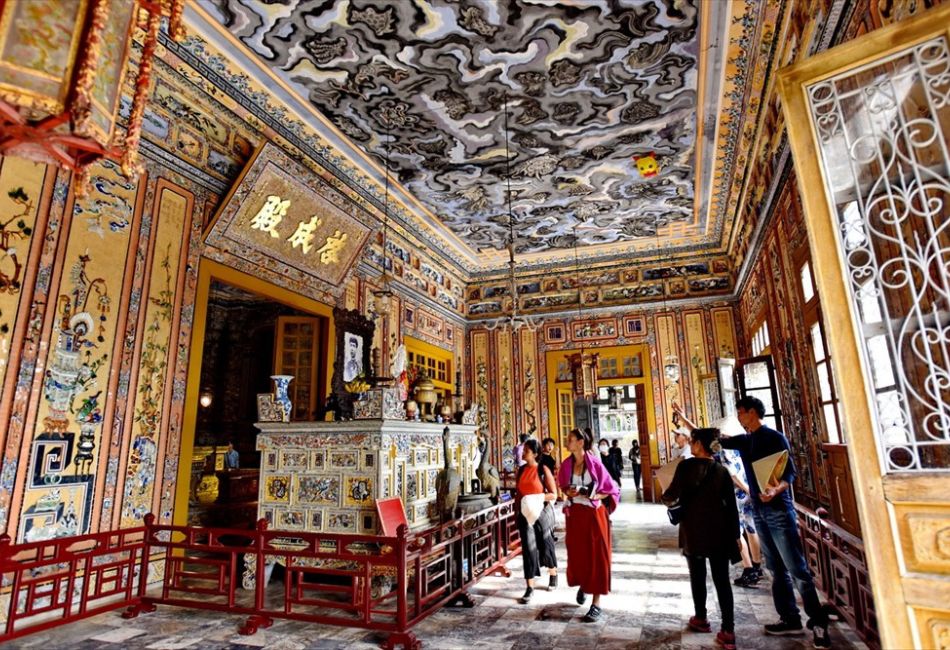
Unlike any other site among the Hue Royal Tombs, Khai Dinh’s tomb is bold, dramatic, and visually striking.
Emperor Khai Dinh ruled during the French colonial period, and his tomb reflects strong Western influences blended with traditional symbolism.
5.2. Architecture and Decoration
The tomb rises up the hillside in a series of steep staircases. Inside, the main hall is decorated with elaborate mosaics made from broken porcelain and glass.
Every surface sparkles with detail, creating a sense of grandeur and power.
5.3. Why You Should Visit
- Most visually impressive tomb
- Unique mix of Eastern and Western design
- Incredible interior artistry
For many travelers, this is the most unforgettable of the Hue Royal Tombs.
6. Lesser-Known Hue Royal Tombs Worth Visiting
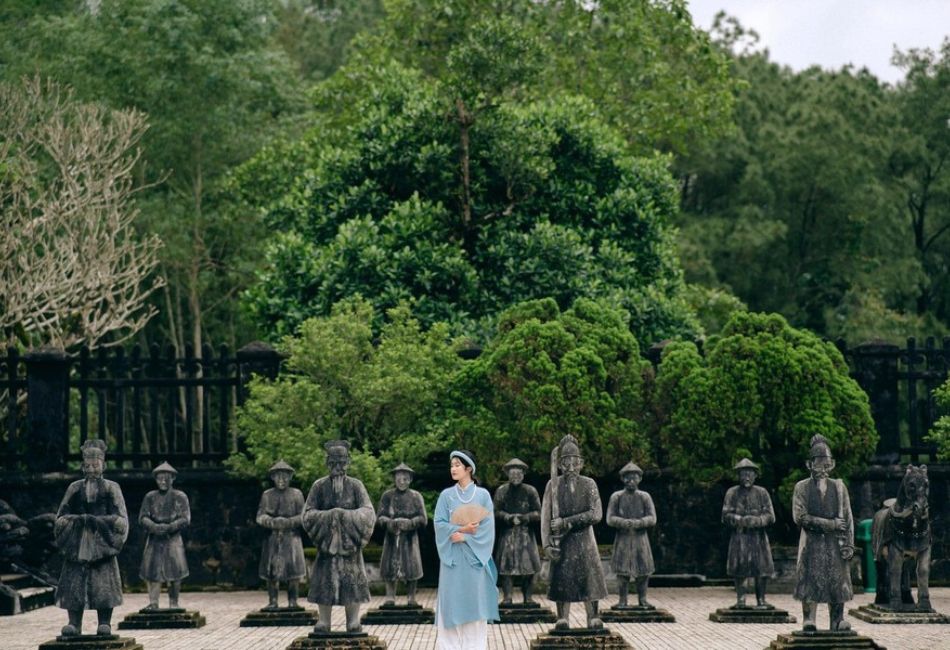
Beyond the famous trio, there are several lesser-known Hue Royal Tombs that offer quieter and more intimate experiences.
6.1. Tomb of Emperor Gia Long
- Founder of the Nguyen Dynasty
- Vast landscape with mountains and rivers
- Minimal decoration, emphasizing nature
This tomb is ideal for travelers seeking solitude and raw natural beauty.
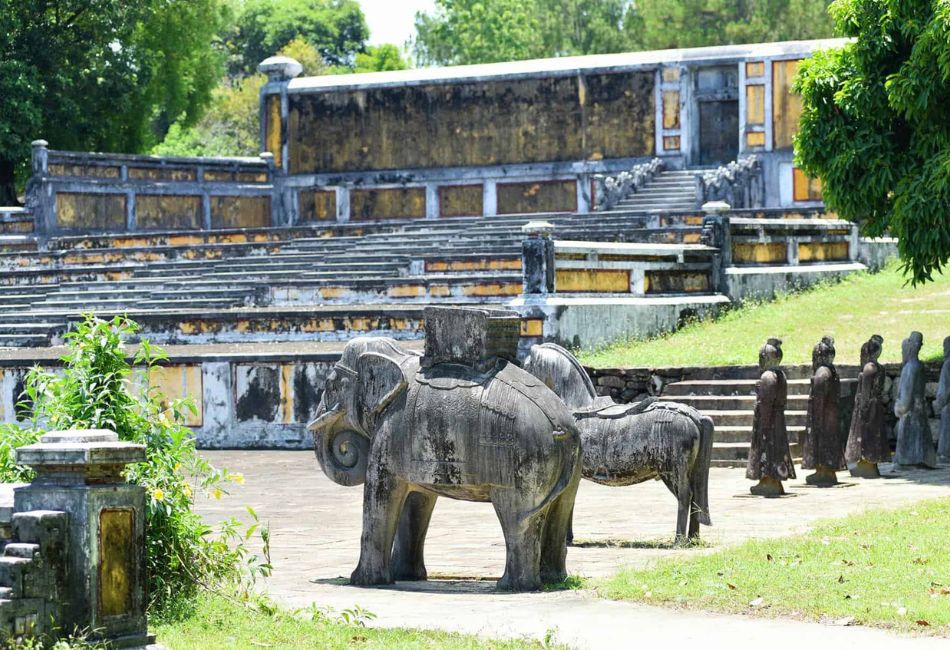
6.2. Tomb of Emperor Dong Khanh
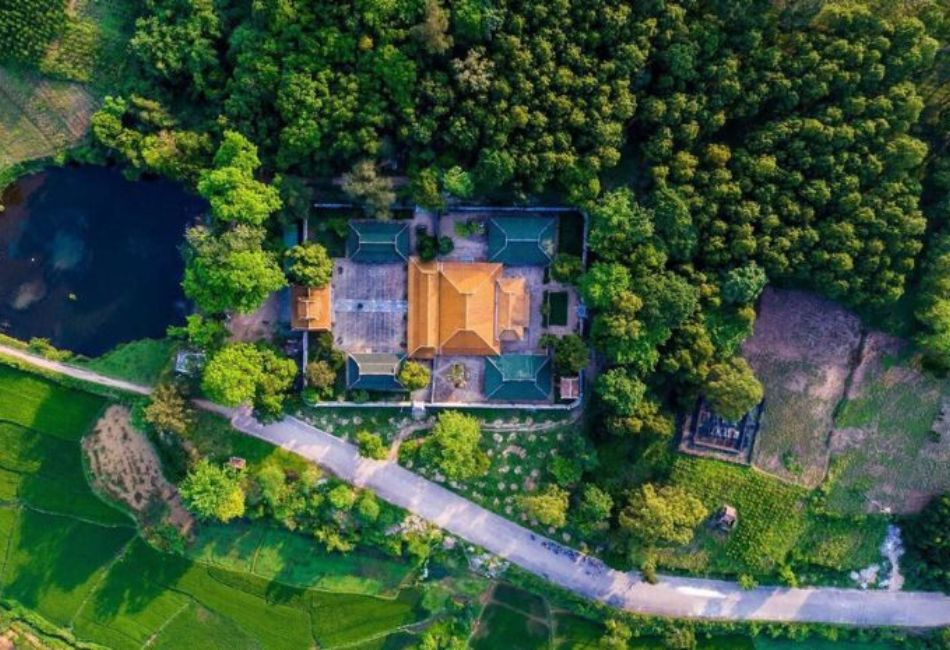
- Transitional style between tradition and modernity
- Smaller and less crowded
- Beautiful wooden architecture
Exploring these lesser-visited sites allows you to experience the Hue Royal Tombs away from the crowds.
7. Best Ways to Visit the Hue Royal Tombs
By Bicycle
Cycling through the countryside is a wonderful way to connect with local life. Many tombs are located along quiet rural roads.
By Motorbike or Private Car
This option offers flexibility, especially if you want to visit multiple Hue Royal Tombs in one day.
With a Guided Tour
A knowledgeable guide can bring history to life, explaining symbolism and personal stories that you might otherwise miss
8. Practical Travel Tips
- Visit early in the morning or late afternoon to avoid heat
- Wear comfortable shoes – there is a lot of walking
- Dress modestly out of respect
- Combine tomb visits with countryside stops or local restaurants
Most travelers spend one to two days exploring the Hue Royal Tombs at a relaxed pace.
9. Final Thoughts
The Hue Royal Tombs are not just historical monuments; they are reflections of human dreams, beliefs, and emotions carved into landscapes of extraordinary beauty.
Each tomb tells a different story, yet together they form a powerful narrative of Hue’s imperial past. Whether you are a history lover, architecture enthusiast, or slow traveler seeking depth, these royal tombs will leave you inspired.When you visit Hue, take the time to slow down, walk gently, and listen. The stories of the emperors are still whispered among the trees, lakes, and ancient stone paths of the Hue Royal Tombs.
0 Comment